
Slip and fall accidents are among the most common premises liability claims in California. While some falls may appear minor at first, the hidden risks of slip and fall accidents often include delayed injuries that are not immediately visible at the scene, making it challenging to prove exactly how and why a fall occurred.
Property owners and insurers frequently dispute liability, especially when there are no neutral witnesses. This is where security cameras play a critical role.
In today’s digital environment, video evidence has become one of the strongest forms of legal proof in slip and fall lawsuits. Surveillance footage can help establish what caused the fall, how long a dangerous condition existed, and whether a property owner failed to take reasonable steps to prevent injury.
This article explains how security cameras impact slip and fall cases, how to obtain surveillance footage, and how California courts evaluate video evidence when determining liability.
Why Surveillance Footage Matters in Slip and Fall Cases
In any premises claim, the injured person carries the burden of proof. This means you must show that the property owner was negligent and that their negligence directly caused your injuries. Surveillance slip case footage can be especially persuasive because it provides an objective record of events.
Security camera video evidence may show:
- Unsafe conditions such as wet floors, uneven pavement, loose rugs, or debris
- How long the hazardous condition existed before the fall
- Whether employees noticed or ignored the danger
- The absence of warning signs or safety barriers
- The actions of both the injured person and the property owner’s staff
This type of footage often eliminates speculation and reduces disputes about what actually happened.
According to the National Floor Safety Institute, slip and fall accidents account for more than 8 million emergency room visits each year in the United States, making falls the leading cause of ER visits.
Because of how common these accidents are, insurers frequently challenge claims. Video evidence can be the difference between a denied claim and a successful recovery.
Can You Request Camera Footage After a Slip and Fall?
Yes, but timing is critical. Most businesses retain surveillance footage for a limited period, often between 24 hours and 30 days, depending on their system and storage capacity. If footage is not requested quickly, it may be overwritten or deleted.
To protect your claim-filing efforts, consider the following steps:
- Send a written preservation request promptly
Notify the property owner or manager in writing as soon as possible. Request that all surveillance footage from the date and time of the incident be preserved.
- Consult an attorney early
A Glendale slip and fall lawyer can send a formal preservation letter and, if necessary, issue a subpoena to secure the footage before it is lost.
- Collect additional evidence immediately
If footage is unavailable, other legal proof, such as photos, witness statements, incident reports, and medical records, can still support your premises claim.
Even if a camera did not capture the exact moment of the fall, footage showing the hazardous condition before or after the incident may still be highly relevant.
How Video Evidence Affects Liability in California
California applies a comparative negligence standard. This means that fault can be shared between multiple parties. If video evidence shows that the injured person was partially responsible, such as walking while distracted, compensation may be reduced but not eliminated.
At the same time, surveillance footage often reveals facts that strengthen claims against property owners. In many cases, video evidence has shown that:
- Employees walked past spills or hazards without addressing them
- No warning signs were placed around dangerous conditions
- A hazard remained unattended for an unreasonable amount of time
This issue is especially important when injuries occur on the job, where slip and falls in the workplace may trigger different legal rights and reporting requirements.
When footage demonstrates a failure to maintain safe premises, it can significantly increase the property owner’s share of liability.
Legal Standards for Using Surveillance Footage in Court
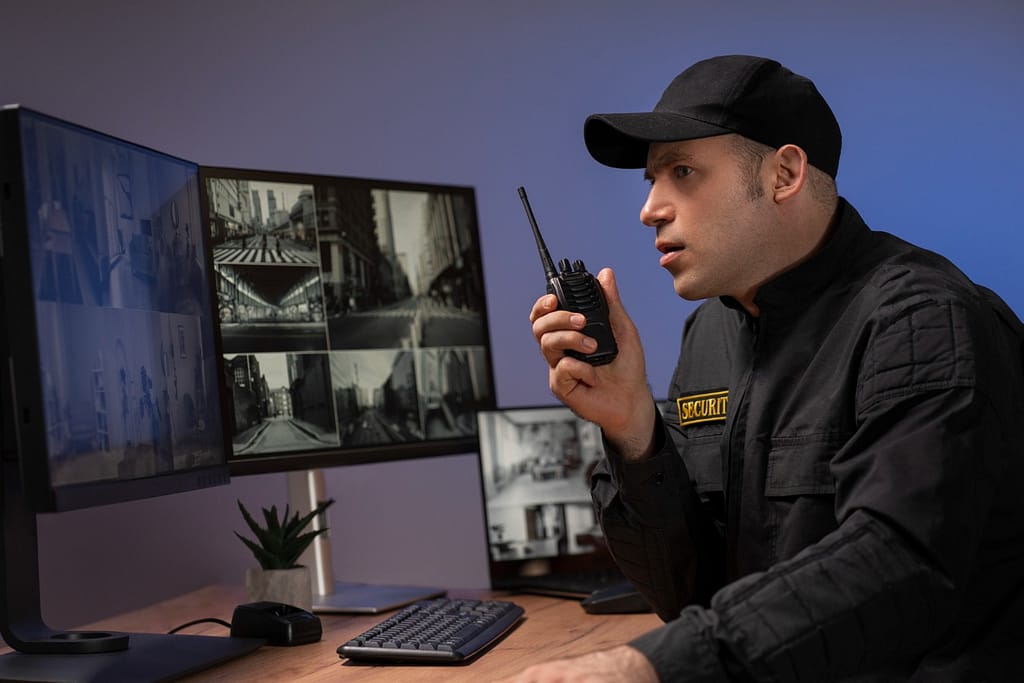
Not all video evidence is automatically admissible. To be used in a California court, surveillance footage must meet specific legal standards.
Authenticity
The footage must be proven genuine and unaltered. This often requires testimony about how the video was recorded and stored.
Relevance
The video must directly relate to the slip and fall lawsuit and help establish facts in dispute.
Clarity and reliability
Footage should clearly show the conditions or events in question. Poor quality or incomplete video may be challenged by insurers or defense attorneys.
An experienced slip and fall attorney in Glendale knows how to properly authenticate video evidence and present it in a way that supports your claim rather than undermines it.
What If There Were No Cameras?
While video evidence is powerful, it is not the only way to prove liability in a slip and fall case. Courts regularly consider other forms of legal proof, including:
- Eyewitness statements
- Photographs of the scene and injuries
- Incident or accident reports
- Medical documentation linking injuries to the fall
- Maintenance and cleaning logs
In some cases involving a slip and fall at a rental property, if a property owner had security cameras but failed to preserve footage after receiving notice of a claim, courts may draw a negative inference against them.
Conclusion: Do Not Delay After a Slip and Fall
Time-sensitive evidence can disappear quickly after a slip and fall accident. Surveillance footage is often erased within days or weeks, making early action critical. The sooner you begin documenting your injuries and pursuing your claim, the stronger your position will be.
Understanding how video evidence affects liability and claim filing can help protect your rights and improve your chances of a fair outcome.
At Court House Lawyers, we understand how to secure and use surveillance footage and other critical evidence to build strong slip and fall cases. We handle the legal process so you can focus on recovery.
There are no upfront fees, and you pay nothing unless we win your case.
Schedule a free consultation today to learn how we can help protect your rights and pursue the compensation you deserve.