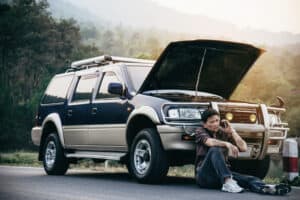
California lemon law is a set of consumer protections established under the Song-Beverly Consumer Warranty Act (Civil Code §1790 et seq.) that requires vehicle manufacturers to repurchase or replace a defective vehicle when they cannot repair it within a reasonable number of attempts. The law covers new and certain used vehicles still under the manufacturer’s original warranty, and it applies whether you purchased or leased.
This guide covers what qualifies under the law, how many repair attempts trigger your rights, what recovery you are entitled to, and what to do if you believe your vehicle is a lemon.
You may have a California lemon law claim if:
- The same defect has been back to the dealer two or more times for a serious safety issue — brakes, steering, airbags
- The same problem has been back four or more times and still isn’t fixed
- Your vehicle has spent 30 or more cumulative days in the shop for warranty repairs
- The defect substantially affects how the vehicle drives, how safe it is, or what it’s worth
- The vehicle was purchased or leased new, or certified pre-owned under an active manufacturer warranty
- The manufacturer has denied your repurchase request or stopped responding
You don’t have to meet every item on this list. One well-documented qualifying defect with enough repair attempts is often sufficient. If you’re not sure whether your situation qualifies, the sections below explain exactly what the law requires, and what it doesn’t.
How California Lemon Law Works
Enacted in 1970 and expanded significantly in the decades since, the Song-Beverly Consumer Warranty Act is widely considered the strongest state lemon law in the country. Under Civil Code §1790 et seq., when a manufacturer or its authorized dealer cannot repair a defect covered by the manufacturer’s new vehicle warranty after a reasonable number of attempts, the manufacturer must offer one of three remedies:
- A replacement vehicle of equal value
- A full refund of the purchase or lease price, minus a mileage offset for use before the first repair attempt
- A cash settlement negotiated in lieu of the above
The law exists because the manufacturer writes the warranty, employs the repair technicians, and controls the parts supply. When that system fails the consumer repeatedly, the Song-Beverly Act shifts the burden back to the party responsible for the defect.
Which Vehicles Does California Lemon Law Cover?
Under Civil Code §1791(a), the law protects any “consumer”, defined as an individual who buys or leases a new motor vehicle primarily for personal, family, or household use. Coverage is broader than most vehicle owners realize.
Covered vehicles include:
- New cars, trucks, SUVs, and vans purchased or leased from a dealership
- Motorcycles purchased with a manufacturer warranty
- Business-use vehicles, if the company owns five or fewer vehicles registered in California
- Leased vehicles — the law applies to the lessee just as it applies to a buyer
- Certified pre-owned vehicles still covered by the original manufacturer’s new vehicle warranty at the time of purchase
What is not covered:
- Vehicles purchased from a private seller with no manufacturer warranty remaining
- Defects caused by the owner through misuse, neglect, or unauthorized modification
- Cosmetic issues that do not affect the vehicle’s safety, use, or value
Tesla and Mercedes-Benz vehicles are two of the most common manufacturers seen in California lemon law claims, both because of the complexity of their systems and because of the frequency with which their defects recur across multiple repair attempts. If your EV lemon law California situation involves battery degradation, software failures, or charging system faults that the manufacturer cannot resolve, you may have a strong claim regardless of the brand.
What Qualifies as a Lemon in California?
Two conditions must both be true for a vehicle to qualify under California lemon law.
First: the defect must substantially impair safety, use, or value. Not every mechanical problem qualifies. A malfunctioning infotainment screen that the dealer cannot fix after repeated attempts may qualify if it substantially impairs the vehicle’s use. A scratch on the dashboard does not. The legal standard is “substantial impairment”, meaning the problem meaningfully affects how the vehicle functions, how safe it is to drive, or its market value. Common defects that meet this standard include engine failures, transmission faults, brake and steering malfunctions, electrical system problems, airbag defects, and EV battery or charging failures.
Second: the defect must be covered by the manufacturer’s warranty, and the manufacturer must have had a reasonable number of attempts to fix it. The warranty is the threshold. If the defect falls outside warranty coverage, because the vehicle is too old, has too many miles, or the problem was caused by owner misuse, the lemon law does not apply. If the defect is covered and the manufacturer has had multiple attempts and cannot resolve it, you meet the second condition.
For a detailed breakdown of which specific defects most commonly qualify, see our guide to common car defects covered by lemon law. If you are unsure whether your situation meets the substantial impairment standard, how to know if your car is a lemon walks through the self-assessment process in detail.
You can also check whether your vehicle’s defect has been reported by other owners through the NHTSA vehicle complaints database — a federal record of consumer safety complaints that can support a lemon law claim when the defect is documented across multiple vehicles.
How Many Repair Attempts Does It Take?
California lemon law does not set a hard number. What it sets is a legal presumption. Under Civil Code §1793.22 — the Tanner Consumer Protection Act — your vehicle is presumed to be a lemon if any of the following occur within the first 18 months or 18,000 miles of delivery, whichever comes first:
| Situation | Threshold |
|---|---|
| Serious safety defect (brakes, steering, etc.) | 2 or more repair attempts |
| Any other covered defect | 4 or more repair attempts |
| Any warranty repair(s) | 30+ cumulative days out of service |
Meeting the presumption matters because it shifts the burden to the manufacturer to prove the vehicle is not a lemon. You do not have to meet these thresholds to pursue a claim, a manufacturer can still be liable outside of them, but when you do, your legal position strengthens considerably.
One common question is about the “$3,000 rule.” That figure comes from the civil penalty provision under §1794(e), which allows a consumer to recover up to two times the vehicle’s value if the manufacturer’s refusal to repurchase was willful. It is not a repair attempt threshold. It is a penalty that can be added to an already successful claim.
For the full picture of how these timelines interact with your specific situation, see our California lemon law timeline guide.
What Court House Lawyers Sees in Practice
The repair threshold table tells you what the law requires. What it doesn’t tell you is what actually happens when you walk into a dealership with a recurring defect. These are patterns George sees across the cases that come through the firm.
The most common qualifying defects we handle:
Transmission failures and hesitation are the single most frequent defect type — particularly in CVT-equipped vehicles (Nissan, Kia, Hyundai) and in plug-in hybrid systems (Jeep 4xe, Ford models). Electrical and software failures from infotainment blackouts to full system failures are the fastest-growing defect category, driven by the increasing complexity of modern vehicle electronics. EV battery issues, particularly range degradation and charging failures in Tesla and Rivian vehicles, are a growing share of the California lemon law claims we see. Brake and steering defects, while less common, qualify fastest: two repair attempts on a serious safety defect trigger the legal presumption.
The most common manufacturer mistakes that strengthen a claim:
Manufacturers frequently attempt a software update as a repair attempt without resolving the underlying defect. Each update counts as a repair attempt. Dealers often return vehicles marked “could not duplicate,” meaning no fault was found during inspection. These visits still count toward the repair attempt total if the defect was reported, regardless of whether the dealer reproduced it. Some dealers write one repair order covering multiple visits. We push back on this in discovery; each visit should be documented separately.
The most common consumer mistakes that weaken a claim:
Accepting cash settlements directly from the manufacturer without legal review. Manufacturers make direct settlement offers specifically because unrepresented consumers routinely accept figures that exclude the civil penalty, the full mileage offset calculation in the consumer’s favor, and incidental costs. Waiting too long between repair visits also hurts; the longer the gap, the easier it is for a manufacturer to argue the defect was resolved. If the problem returns, go back to the dealer and get it documented immediately.
What Can You Recover Under California Lemon Law?
When a vehicle qualifies, the law provides for significant recovery, and understanding every component matters before you accept any offer from a manufacturer.
Full buyback (repurchase): The manufacturer refunds the original purchase price including down payment, monthly payments made, and finance charges minus a mileage offset. The offset is calculated from the date of first repair attempt, not the date of purchase, under Civil Code §1793.2(d)(2)(C). The further into your ownership the first repair visit fell, the smaller your offset.
Replacement vehicle: If you prefer a new vehicle over a refund, the manufacturer must provide a comparable replacement at no additional cost.
Incidental costs: Towing charges, rental car expenses, and registration fees tied to the defect are all recoverable in addition to the base refund or replacement value.
Civil penalty: If the manufacturer’s refusal to repurchase was willful, meaning they knew the vehicle was a lemon and refused to act, the court can impose a civil penalty of up to two times the vehicle’s value on top of compensatory damages.
Attorney fees paid by the manufacturer: Under the Song-Beverly Act, a consumer who prevails pays nothing in legal fees. The manufacturer covers those costs separately. This is the most important financial detail in California lemon law, and it is what Court House Lawyers’ No-Client-Cut Promise is built on: fees are billed directly to the manufacturer. They never come out of your buyback check. Use the lemon law mileage offset calculator to estimate your recovery before your consultation.
For a detailed walkthrough of how the recovery process unfolds, see the lemon law buyback process explained. If you are weighing a buyback against a replacement vehicle, lemon law buyback vs. replacement breaks down which makes more financial sense depending on your situation.
The California DMV Lemon Law Buyback{rel=”nofollow”} records explain how the state handles title inscriptions after a repurchase — a relevant step if you are curious about what happens to the vehicle after surrender.
Working with a California lemon law attorney from the outset is the most reliable way to ensure every recoverable component is included in your demand. Manufacturers do not volunteer the civil penalty or the full incidental costs in their initial offers.
Lemon Law vs. Warranty Claim: What’s the Difference?
Many vehicle owners assume a lemon law claim is an escalated warranty repair. It is not. The two involve different legal rights, different remedies, and fundamentally different leverage.
| Feature | Warranty Claim | Lemon Law Claim |
|---|---|---|
| Primary goal | Repair the vehicle | Repurchase or replace the vehicle |
| Repair limits | Determined by the manufacturer | Statutory — a reasonable number of attempts |
| Legal leverage | Set by the manufacturer’s terms | Imposed by statute; presumption in consumer’s favor after thresholds met |
| Attorney fees | Paid by the consumer | Paid by the manufacturer if the consumer prevails |
| Manufacturer obligation | Repair under warranty terms | Repurchase, replace, or face civil penalties |
A warranty claim keeps you in the repair loop. A lemon law claim ends it. For a deeper comparison, see our guide to lemon law vs. warranty claims.
Common Lemon Law Misconceptions
Myth 1: Lemon law only applies to new cars.
False. Used and certified pre-owned vehicles still covered by the original manufacturer’s new vehicle warranty qualify. Rodriguez v. FCA (2024) clarified the limits for third-party used vehicle sales, but vehicles purchased from authorized dealers under active manufacturer warranties remain covered.
Myth 2: You have to sue to get a result.
False. Most California lemon law claims resolve through negotiation without litigation. Under AB 1755’s pre-litigation notice requirements, many manufacturers respond to a well-prepared demand before a lawsuit is ever filed. Litigation is the backup, not the default.
Myth 3: Any defect qualifies.
False. The defect must substantially impair the vehicle’s safety, use, or value while covered by the manufacturer’s warranty. A persistent rattling noise that does not affect performance and is entirely cosmetic will not qualify. A transmission that the dealer has attempted to repair four times under warranty almost certainly will.
Myth 4: You have four years to file.
This changed. AB 1755 (effective April 2025) amended the statute of limitations for California lemon law claims. See our California lemon law 2025 updates guide for a full breakdown of what changed. Do not assume the old deadline applies. The window may be shorter than you think.
Why the Attorney You Choose Changes the Outcome
Most California lemon law claims that fail do not fail because the vehicle didn’t qualify. They fail because the demand wasn’t built correctly, the documentation didn’t match what the law requires, or the consumer accepted the first offer without understanding what the full claim was worth.
The manufacturer’s legal team reviews lemon law demands every day. They know which claims are built by attorneys who will litigate and which are built by consumers or firms that won’t. That assessment drives what they offer — and how fast they offer it.
Three things determine whether a lemon law claim produces a fair result:
Documentation. Every qualifying repair order must be identified, every day out of service accounted for, and every civil penalty provision evaluated before the demand goes out. Manufacturers do not include the civil penalty in offers to unrepresented consumers. An attorney who catches it does.
Speed. The AB 1755 pre-litigation notice requirement added a procedural step before filing. Firms that are slow to issue the demand give manufacturers more time to stall. Every week without a demand is leverage the other side retains.
Credibility to litigate. Manufacturers respond differently to attorneys who have a demonstrated track record of filing. A demand is worth what the attorney behind it is prepared to back up.
George Mkrtchyan founded Court House Lawyers after working at a large Century City firm where he watched lemon law cases sit for months untouched. Manufacturers stall when there is no pressure to move. He built this firm around the opposite model: repair records reviewed immediately, demands issued without delay, and every case prepared as if it is going to trial.
The results have been specific. A Tesla owner came to the firm after the manufacturer denied the repurchase, claiming the defect had been resolved. Court House Lawyers used the manufacturer’s own repair orders as the evidentiary basis for a new demand. The denial was reversed and the full buyback secured within 30 days.
In MBUSA Case #BB-036973, a Mercedes-Benz client had been denied once without an attorney. Court House Lawyers built the case from the existing repair record and submitted a direct demand to Mercedes-Benz USA. The result was a full buyback with the $5,250 mileage offset waived, money the client kept in full because our fees were billed separately to the manufacturer. The case closed within 60 days.
George was recognized by Insider Weekly as the Best Personal Injury Lawyer in Los Angeles for 2025. He handles lemon law cases personally, not through associates or paralegals.
Under California law, the manufacturer pays attorney fees in successful lemon law claims. Those fees are billed directly to the manufacturer and never deducted from the client’s buyback check. The No-Client-Cut Promise is not a marketing offer, it is how the fee structure of California lemon law actually works, and it is the reason there is no financial barrier to getting professional representation.
If your vehicle qualifies, talk to a California lemon law attorney about what the claim is worth before you accept anything from the manufacturer.
What to Do If You Think You Have a Lemon
Acting promptly matters. The stronger your documentation and the earlier you move, the stronger your position.
1. Collect and preserve every repair order.
Every visit to the dealership for the recurring defect should have generated a written repair order. Gather all of them. These are the foundation of your claim — they establish the defect, the attempts to fix it, and the days your vehicle was out of service.
2. Track every day your vehicle is out of service.
Cumulative days in the shop for warranty repairs count toward the 30-day threshold. Keep a running log with dates in and out, and match those dates against your repair orders.
3. Notify the manufacturer in writing.
Under AB 1755, sending a pre-litigation demand to the manufacturer is now a required procedural step before filing a lawsuit. An attorney prepares and sends this demand in a format that complies with current law and is designed to produce a response.
4. Do not accept the manufacturer’s first offer without advice.
Manufacturers regularly make initial offers that exclude the mileage offset calculation that favors the consumer, the civil penalty provision, and incidental costs. Their opening number is rarely the right number. Before signing anything, get a case review. For deadline-specific guidance, see our lemon law deadline California guide.
Common Questions About California Lemon Law
Can I qualify if my car has been repaired — just not for the same defect?
Lemon law protection applies to a specific defect that recurs despite repair attempts. If your vehicle has had five different unrelated problems each fixed once, that does not qualify. The law is looking for the same substantial defect that the manufacturer cannot resolve. Different defects, each fixed once, do not aggregate into a lemon law claim.
What if the dealer says they can’t reproduce the problem?
A “could not duplicate” notation does not reset your repair attempt count. If you brought the vehicle in for the same defect, that visit counts — even if the dealer didn’t observe the fault during inspection. Document every visit, every complaint, and every repair order regardless of the outcome the dealer records.
Can I qualify if I’m still making payments on the vehicle?
Yes. The lemon law applies regardless of whether you have paid off the vehicle. In a buyback, the manufacturer refunds the amount you paid — including your down payment and monthly payments made — and any remaining loan balance is typically resolved as part of the repurchase. You are not required to own the vehicle outright to have a claim.
What if the manufacturer offers me a cash settlement to keep the car?
You can accept it, but not without getting independent legal advice first. Cash-and-keep settlements offered directly by manufacturers almost always exclude the civil penalty provision and underestimate the mileage offset calculation that favors the consumer. In one case we handled, a manufacturer’s direct cash offer of $3,000 was increased to $15,000 after we reviewed the repair history and resubmitted the demand.
Does lemon law cover problems that started after the warranty expired?
No. The defect must have manifested and been reported for repair while the vehicle was still covered by the manufacturer’s warranty. If the warranty expired and the defect appears afterward, the lemon law does not apply, though other consumer protection remedies may depending on the circumstances.
What if I leased the vehicle and the lease is almost up?
File immediately. Lease expiration does not eliminate your lemon law rights, but waiting until after the lease ends significantly complicates the claim. In one case we handled, a client came to us with four months left on a four-year lease — we filed, and they recovered every dollar paid into the lease over the full term minus a small mileage offset, with one day to spare before the lease expired.
Does the law apply if I bought the car used from a private seller?
Generally no, unless the vehicle came with an active manufacturer warranty that transferred at the time of sale and the defect is covered by that warranty. Rodriguez v. FCA (2024) clarified that the Song-Beverly Act’s protections apply primarily to purchases from dealers, not private-party transactions.
What does the process actually look like from start to finish?
After a case review and retainer, we pull the repair records, send the AB 1755 pre-litigation demand to the manufacturer, and give them the legally required response window. Most strong cases produce a written offer within 30 to 90 days of the demand. If the manufacturer refuses to make a fair offer, we file. Most cases resolve before trial. The manufacturer pays our fees at resolution, you pay nothing out of pocket at any stage.
If your vehicle keeps going back to the dealer for the same problem, tell us what’s happening. Free case review; the manufacturer pays our fees. You keep your buyback check. Start my free case review or call: (818) 293-8293